Artificial intelligence is no longer confined to research labs or tech giants. In 2025, it’s available on demand just like electricity or internet with businesses tapping into AI as a Service (AIaaS) to power everything from marketing automation to personalized customer experiences.
What once required millions in infrastructure and specialist talent can now be accessed through easy-to-use platforms offering ready-made AI services. Whether you’re enhancing language training with an AI language coach, delivering curated fashion recommendations via a virtual fashion stylist, or improving wellness with a personal fitness coach, AIaaS is enabling companies of all sizes to plug into the future fast.
In this comprehensive guide, we explore how AIaaS works, where it’s heading, and how your business can harness its full potential in 2025 and beyond.
What is AI as a Service
AI as a Service is a cloud based offering that allows businesses to access and deploy AI tools and models on demand without having to build complex AI infrastructure from scratch. These services are offered by cloud providers and AI platforms who take care of everything from data storage and model training to ongoing maintenance and updates.
AIaaS includes a wide range of offerings such as machine learning APIs, natural language processing tools, computer vision, predictive analytics and generative AI models. Businesses can subscribe to or pay per use for these AI services and integrate them into their existing systems with ease.
In 2025, AIaaS is not just for tech giants. Thanks to intuitive interfaces, APIs and pre trained models, even small and medium enterprises are now able to harness the power of AI in areas like customer service, marketing, product design, human resources and logistics.
Key Types of AI Services in AIaaS
AIaaS comes with diverse service categories that cater to different business needs. Here are some of the most widely used ones:
1. Machine Learning as a Service
This includes platforms that offer tools to train, deploy and monitor machine learning models. Businesses use these models to make predictions, identify trends, and automate decision making. Providers often include drag and drop interfaces, prebuilt algorithms and model training environments.
2. Natural Language Processing Services
These services allow businesses to process and understand human language. They power chatbots, sentiment analysis tools, voice assistants, and language translation apps. AI language coach applications have become particularly popular, offering personalized feedback and fluency training to users across global enterprises.
3. Computer Vision Services
Computer vision enables machines to interpret and make decisions based on visual data. AIaaS offerings include facial recognition, image tagging, object detection and more. E commerce brands are increasingly leveraging computer vision for personalized shopping experiences through tools like the virtual fashion stylist.
4. Conversational AI
AIaaS platforms offer conversational agents capable of holding realistic dialogues with customers. These agents are used in support desks, sales outreach, virtual coaching and employee onboarding. The AI language coach and intelligent tutors are prime examples of how conversational AI is shaping modern learning and communication.
5. Robotic Process Automation (RPA)
By combining AI with RPA, businesses automate repetitive tasks like invoice processing, data entry, and report generation. This hybrid automation model is reducing costs while improving accuracy and efficiency.
6. AI for Personal Wellness and Coaching
Businesses in the wellness and fitness sectors are integrating AI for personalized coaching. The personal fitness coach powered by AI uses data from wearables, apps, and health history to create custom workout and nutrition plans. These AI services are widely adopted by fitness platforms, corporate wellness programs, and health apps.
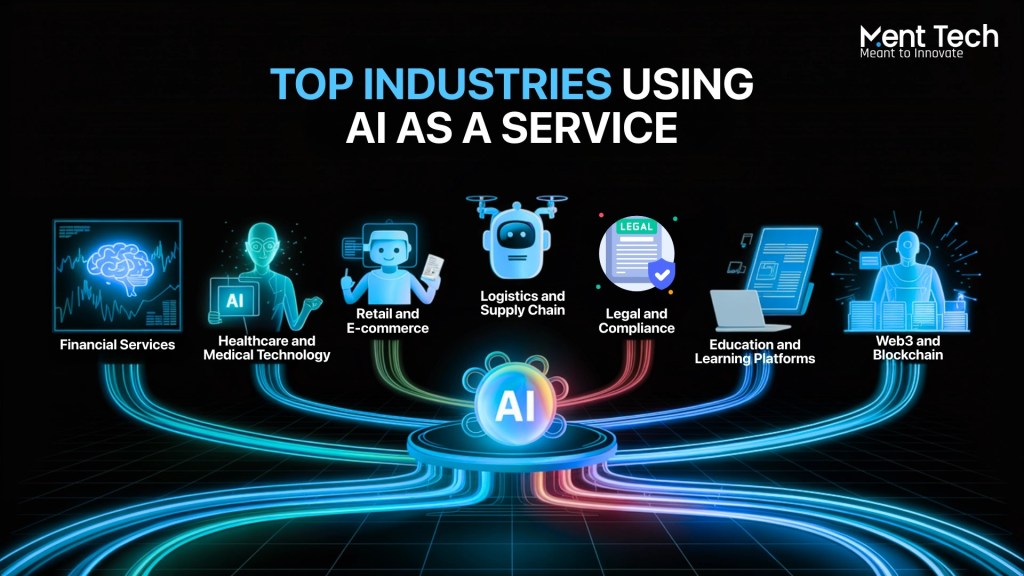
Use Cases of AIaaS Across Industries
AI as a Service is revolutionizing various sectors by delivering targeted, cost effective solutions. Here are just a few transformative use cases:
Healthcare
Hospitals use AIaaS platforms for predictive diagnostics, patient monitoring, drug discovery and medical imaging. AI powered chatbots assist patients with appointment scheduling and post operative care.
Education
Online education platforms leverage AI services like intelligent tutoring systems, AI language coach apps, and personalized content recommendations to enhance learning outcomes and student engagement.
Retail and Fashion
Retailers use AIaaS for demand forecasting, dynamic pricing and visual merchandising. Virtual fashion stylist tools analyze body types, preferences and trends to deliver hyper personalized shopping experiences.
Finance
AIaaS tools help financial institutions with fraud detection, risk analysis, algorithmic trading and customer service automation. Natural language generation tools also assist in creating financial reports in real time.
Human Resources
HR departments are integrating AI services to screen resumes, assess candidate fit, and automate onboarding processes. Sentiment analysis tools monitor employee satisfaction through internal communication.
Benefits of AI as a Service
The appeal of AIaaS lies in its accessibility, flexibility and affordability. Here are some key advantages:
Cost Efficiency
AIaaS eliminates the need for upfront investment in infrastructure and data science talent. Companies only pay for what they use, making advanced AI accessible to startups and large enterprises alike.
Scalability
Cloud based AI services can easily scale with growing data and user demands. Businesses can start small and expand their usage as needed.
Faster Time to Market
With pre trained models and easy integrations, businesses can launch AI driven solutions much faster than if they built everything in house.
Continuous Innovation
AIaaS providers regularly update their models, ensuring that users always have access to the latest capabilities without managing updates themselves.
Customization
Advanced platforms offer options to fine tune models to specific business needs. Whether it’s training an AI language coach to fit a corporate training module or adjusting a virtual fashion stylist for regional preferences, customization is easier than ever.
Challenges and Considerations
While AIaaS provides tremendous benefits, businesses must navigate certain challenges:
Data Privacy and Security
Since AIaaS involves transferring data to cloud platforms, businesses must ensure compliance with data protection regulations and choose providers with strong security protocols.
Integration Complexity
Integrating AI services into legacy systems may require careful planning, especially in traditional sectors. Choosing providers with robust documentation and integration support is critical.
Vendor Lock in
Relying too heavily on a single AIaaS vendor can create dependency. Businesses should aim for modular architecture and interoperability to retain flexibility.
Ethical AI
Responsible AI practices are more important than ever. Businesses must ensure that the AI models they use are transparent, explainable and free of bias.
How to Get Started with AIaaS
Getting started with AI as a Service in 2025 involves a few key steps:
- Define Clear Objectives — Identify the specific business problems AI can solve.
- Evaluate Use Cases — Start with one or two high impact applications such as customer support automation or a virtual fashion stylist integration.
- Choose the Right Provider — Compare providers based on features, pricing, scalability, and compliance.
- Plan for Integration — Ensure compatibility with existing infrastructure and allocate technical resources for implementation.
- Monitor and Optimize — Continuously assess performance and refine AI models as needed.
The Future of AIaaS
The AIaaS revolution is democratizing artificial intelligence, removing traditional barriers to entry and giving every business from agile startups to global enterprises the tools to compete in a smart, data-driven world.
By adopting cloud-based AI services, companies gain the flexibility to experiment, the scale to grow, and the intelligence to personalize. Whether it’s through an AI language coach that accelerates employee development, a virtual fashion stylist that elevates user engagement, or a personal fitness coach that brings health insights to individuals, the possibilities are endless.
One thing is clear: in 2025, businesses that embrace AIaaS are not just keeping up they’re setting the pace
 Site Title
Leave a comment